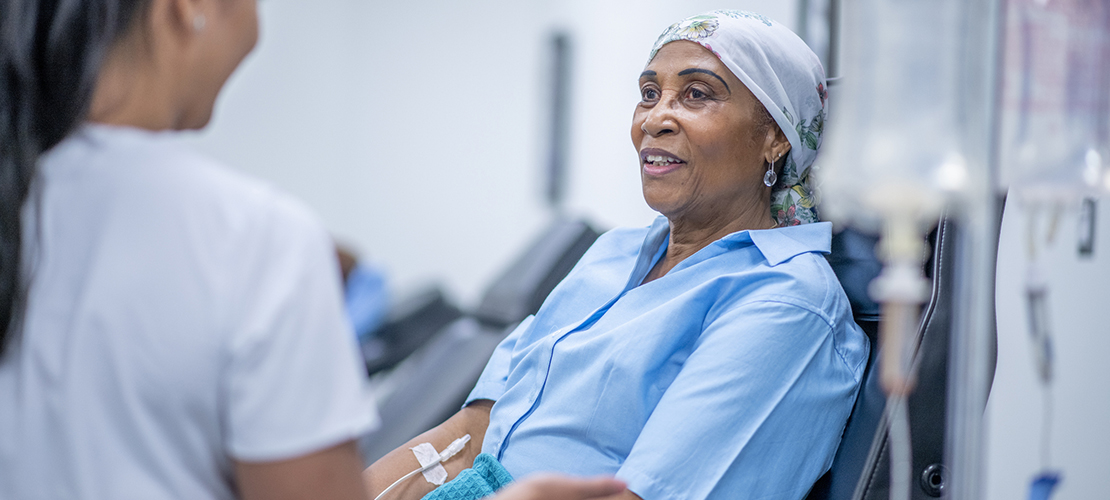



The use of Artificial Intelligence (AI) in medical settings and health services is growing. AI features already sit behind many NHS digital services, including the NHS App and 111 online, helping healthcare professionals guide patients to the right care.
AI has the potential to significantly improve our experience of healthcare. It can enable faster diagnosis, track the progress of a treatment, or help in monitoring recovery - all while supporting the work of doctors and nurses.
Here are some examples of how AI could – or already is – improving healthcare for all of us:
Smart stethoscope can detect heart failure
A new 'smart' stethoscope powered by AI can help identify heart failure in patients. The stethoscope combines traditional heart sound monitoring with additional sensors that measure the heart’s electrical activity – an electrocardiogram or ECG. An AI programme then analyses the ECG to detect signs of heart failure.
In trials, the device correctly identified heart failure in 9 out of 10 cases.
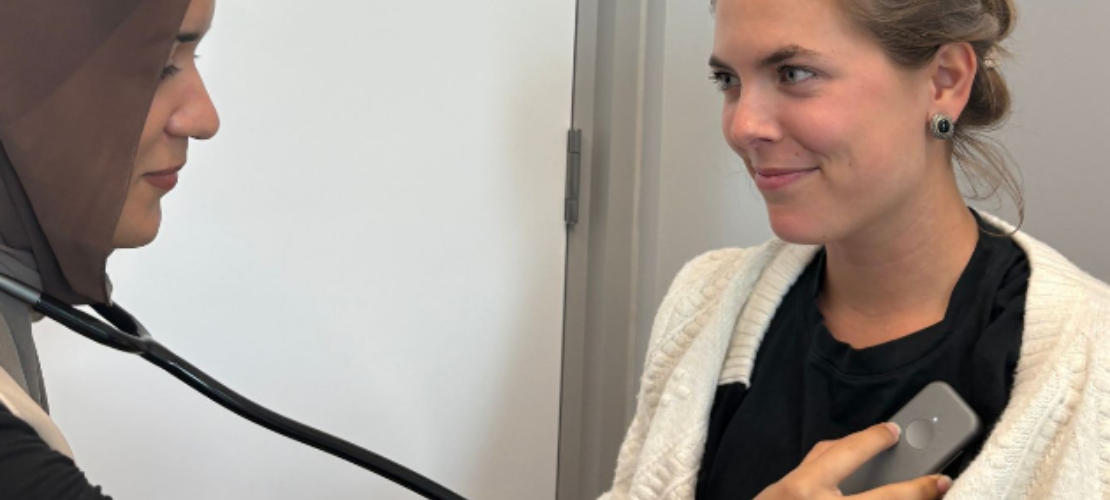
The tool could be used in GP surgeries and community clinics to help diagnose heart failure earlier. This would help GPs to refer patients who need specialist care more quickly, while providing reassurance to those who don't. This would be better for patients and ensure NHS resources are used more efficiently.
Supporting patient consultations and care
New AI technology has been proven to free up clinicians to spend nearly a quarter more time with patients.
The technology automatically transcribes consultations and drafts summarised clinical notes or letters for clinicians to review. It was developed at Great Ormond Street Hospital (GOSH) and tested across nine NHS sites in London, including hospitals, GP practices, mental health services and ambulance teams
Clinicians involved in the study reported that the technology helped them deliver better care for patients. Patients agreed, reporting better interaction with clinicians during appointments and greater satisfaction.
The AI-scribing technology saw particularly strong results when used in A&E, with a 13.4% increase in patients seen per shift.
The technology was developed by a UK-based AI start-up called TORTUS. Importantly, the AI does not do any clinical decision making. All notes and letters are checked and edited by the clinician before being saved to a patient’s record.
The tool is now being rolled out across all outpatient settings at GOSH. The findings have also informed NHS England’s national guidance on AI-enabled scribing

Helping GPs spot urgent cases more quickly
Patients can currently ask for help from their GP by completing an online consultation form either through the NHS app or via the GP practice website. These forms go directly to their GP surgery, so patients don’t have to queue for an appointment.
However, the system can’t identify patients who need urgent help. This can cause delays in getting them the care they need.
Researchers are testing an AI add-on feature, AI Triage, which is trained to automatically identify urgent and emergency cases immediately. They want to see if the system can be accurate, reduce delays and work fairly for all kinds of patients. Forty GP surgeries took part in the study and the results are now being analysed.
Monitoring patients after surgery for complex wounds
Surgery to repair complex wounds can involve moving tissue from one part of the body to another. The tissue is then connected to the body’s blood supply to survive. This is called microvascular free flap surgery.
This type of surgery is usually very successful, though there can sometimes be complications.
To pick up any complications early, medical staff do frequent checks in the first few days after surgery. This includes general observations, such as heart rate and blood pressure. It can also include visual and temperature checks on the flap itself.
In a study, alongside these checks, patients also had photographs taken of the flap twice a day, until they were discharged. A computer model is analysing the images and patient monitoring data. The aim is to see if they could be used to train an AI tool that can detect problems with free flaps earlier and more accurately than medical staff.
Join an AI clinical trial:
Interested in getting involved? There’s currently a range of AI studies recruiting participants through Be Part of Research, that you might be eligible to join:
- A clinical decision tool to improve pregnancy outcomes by improving risk assessment and maternity care (closes April 2026)
- Early Treatment & Artificial Intelligence for Alopecia (closes July 2026) – AI tools to better diagnose and monitor alopecia
- Developing Trustworthy Artificial Intelligence (AI)-Driven Tools to Predict Vascular Disease Risk and Progression (closes May 2029)
Use our study search tool to find a study that interests you.
How you can get involved with research
Sign up to Be Part of Research to be contacted about a range of health and care research.
And if taking part in a study doesn’t feel right at the moment there are other ways to get involved in research.