


As 2025 draws to a close, we look back at some of the amazing research breakthroughs from the past 12 months.
From drones delivering defibrillators to ‘at-home spit tests’ for prostate cancer, technology has evolved the way health conditions are diagnosed and treated.
Research helps us identify the best uses for new technologies and medications in routine healthcare.
But this research is only possible because of the people who volunteer to take part.
Thanks to the work of researchers supported by the National Institute for Health and Care Research (NIHR) and participants, research has made the headlines throughout 2025. Here are just 5 of the many amazing breakthroughs in the news this year.
Defibrillators delivered by drones
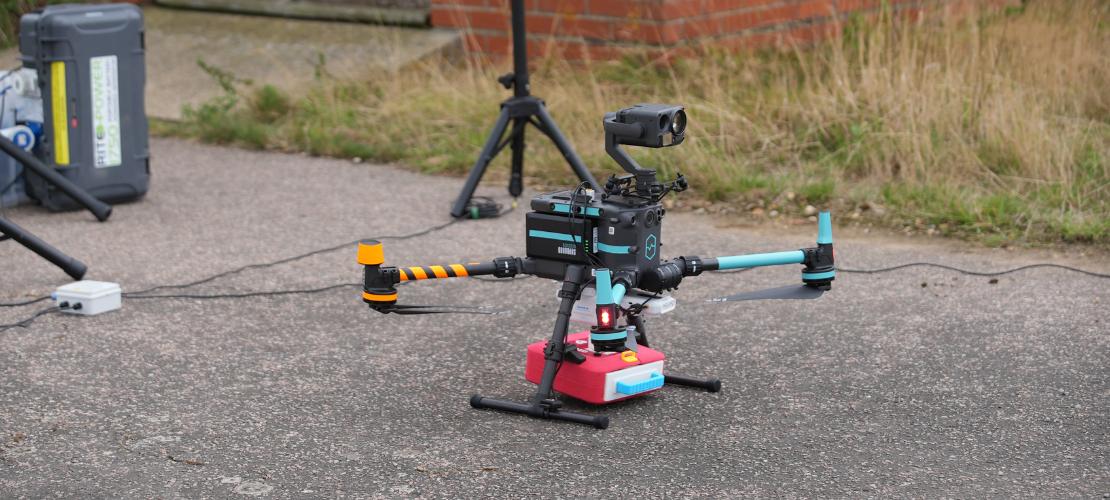
Drones could deliver defibrillators to people having cardiac arrest in the UK faster than ambulance crews.
Researchers have tested using drones to respond to 999 calls. They flew defibrillators to a training exercise in a remote countryside location where ambulance crews would usually be delayed in reaching by road.
Study findings showed that this approach is very promising. The drone flew autonomously and safely, with good links to the ambulance service. On average, it took just over 2 minutes from emergency call to drone take-off.
Researchers hope this is the next step towards using the technology in real-life settings and across the NHS.

Genetic therapy improves sight for blind children
Blind children have gained life-changing improvements in sight following treatment with a pioneering new genetic medicine.
The 4 children who took part in the study were born with a severe impairment to their sight due to a rare genetic deficiency that affects the ‘AIPL1’ gene. The defect causes the retinal cells to malfunction and die. Children affected are only able to distinguish between light and darkness. They are legally certified as blind from birth.
The new treatment is designed to enable the retinal cells to work better and to survive longer. The procedure consists of injecting healthy copies of the gene into the retina through keyhole surgery.
One of the children who received the treatment was Jace, from Connecticut in the United States.
“After the operation, Jace was immediately spinning, dancing and making the nurses laugh. He started to respond to the TV and phone within a few weeks of surgery and, within 6 months, could recognise and name his favourite cars from several metres away; it took his brain time, though, to process what he could now see.”
- DJ, Jace's mother
New treatment for Huntington’s disease
An NIHR-supported study into a new gene therapy treatment for Huntington's disease has revealed positive results.
The new gene therapy, AMT-130, is the first to be tested in people with Huntington’s.
The study involved 29 patients who were given AMT-130 for 36 months, with 12 given a higher dose.
Those given a high dosage of AMT-130 experienced 75% less disease progression after 36 months. They also experienced slower degeneration of motor and cognitive function.
Huntington’s disease is a fatal neurodegenerative disease caused by a single genetic mutation. The gene that causes Huntington’s disease was discovered in 1993.
Symptoms usually begin between the ages of 30 to 50 in those that carry the gene. These include changes in movement, thinking and behaviour.
Until now, there have been no effective treatments to prevent or slow the progression of the disease.
.png)
At-home spit test for prostate cancer
A simple at-home spit test may be more accurate at detecting prostate cancer than current tests, new research suggests.
This new method could better identify the future risk of cancer for some men. The BARCODE 1 study calculated the risk of prostate cancer from DNA extracted from saliva. This is called a polygenic risk score (PRS).
For men with the highest risk score, the study found this to be a better tool than the current prostate cancer risk test. This is a blood test which measures levels of a protein called prostate-specific antigen (PSA). PSA levels can be elevated in men with prostate cancer.
World-first trial launched for fridge-free vaccine
An innovative new vaccine that doesn’t need to be refrigerated or frozen has entered its first clinical trial.
The Stablepharma tetanus-diphtheria vaccine (SPVX02) is completely stable at room temperature. It has been designed to expand access to vaccines worldwide.
Around half of vaccines are wasted globally each year, according to the World Health Organization. Many of these could be avoided by using vaccines that do not need to be stored in a fridge or freezer.
Read the NIHR’s Research Unwrapped series for more amazing health and care research headlines from the past year.
How you can get involved with research
Sign up to Be Part of Research to be contacted about a range of health and care research. Or check out our full list of studies to see if one is right for you.
And if taking part in a study doesn’t feel right at the moment there are other ways to get involved in research.