
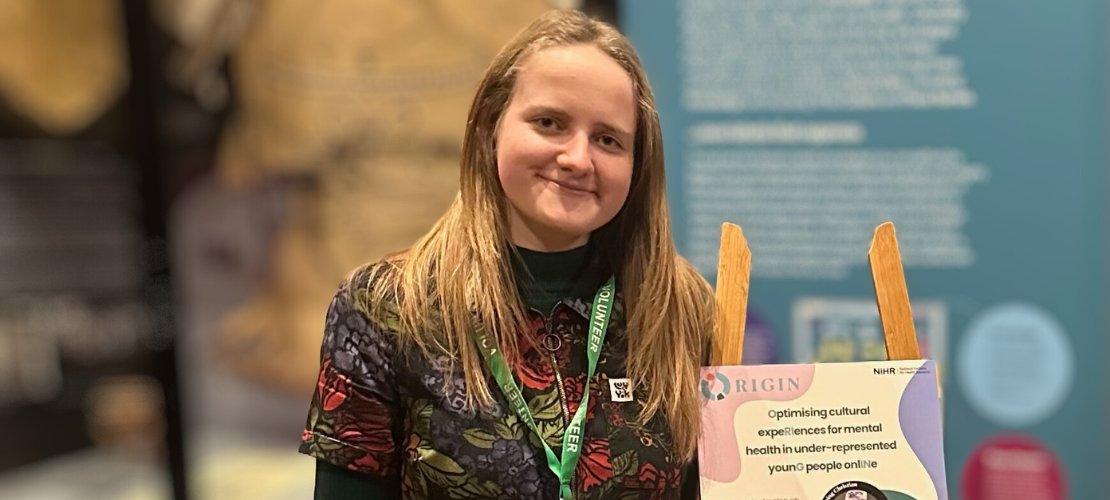
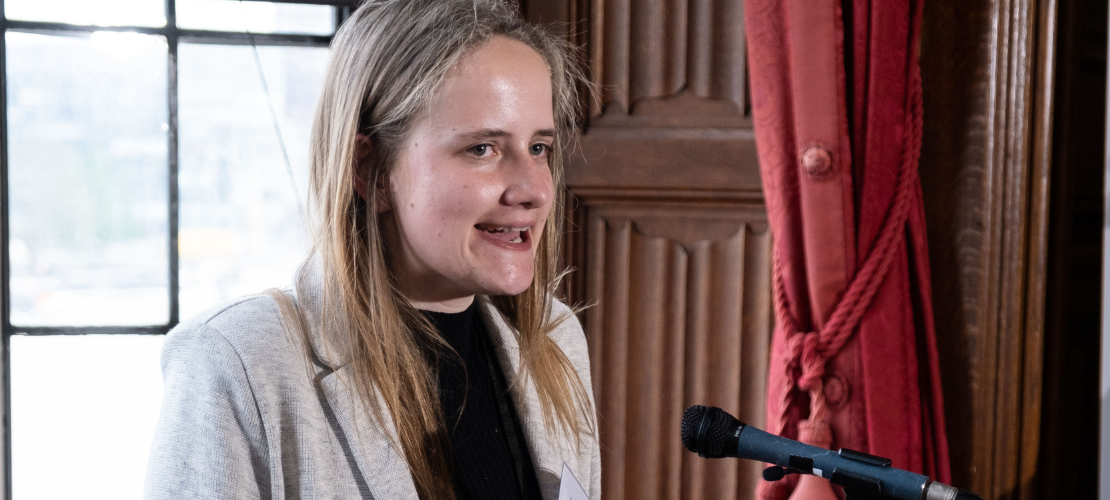
For social media influencer, Lou Chandler (@neurodivergent_lou), getting involved with research has been life changing. Lou is a co-investigator on the NIHR-funded ORIGIN programme. ORIGIN is designing an online arts and culture platform to support mental health in underrepresented 16- to 24-year-olds, including neurodivergent young people.
Neurodiversity is a term to describe natural differences in how people’s brains think and process information. It’s estimated that around 1 in 7 people in the UK are neurodivergent. Neurodivergence can include dyslexia, autism and Attention Deficit Hyperactivity Disorder (ADHD).
Lou talks to us about getting involved in research and encouraging more neurodivergent people to do the same.
What’s been the best thing about working on the ORIGIN Programme? 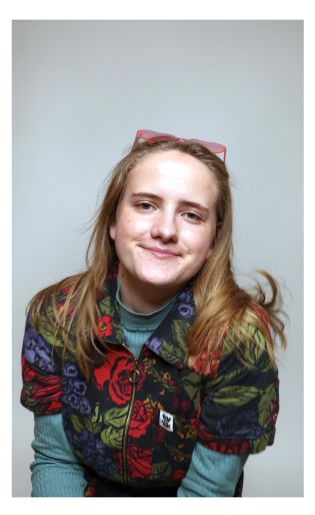
Being involved in this project has been absolutely life changing for me. It’s connected me with lots of other neurodivergent people with different experiences. It’s shown me that, as a community, our experience gives us a real power that we can use to make things better for the next generation. A lot of what drives me, and others like me, is that we’ve had sometimes very negative experiences throughout our lives. Projects like ORIGIN show that we can do something positive so that others don’t have to go through the same thing.
There is some mistrust and suspicion of research within the autistic community. In the past, research was done about autistic people, but they had little say in it.
With projects like ORIGIN, neurodivergent people aren’t just participants. We’re taking leadership roles. We’re designing the research, particularly the public involvement side. This ensures that the needs of neurodivergent people are taken into account and prioritised. And it’s been fantastic to see others from my community building skills and confidence through that work.
Can research sometimes be off putting for neurodivergent people?
Definitely! Our experience is that the world – and that includes the research world – has been designed for non-autistic people. That can bring lots of challenges. Many autistic people experience sensory overload in everyday environments. We often communicate in different ways. We can take things very literally. This can all affect whether a neurodivergent person sees a project as being open to them.
If a study is specifically about neurodivergent people, then the recruitment information will mention that characteristic. But if a study isn’t specifically looking to recruit neurodivergent people, then it might not mention them specifically. That can be a barrier. Sometimes we will screen ourselves out of things, if we don’t see ourselves being represented.
What is being done to make research more accessible?
The key thing is to give neurodivergent people the confidence that they will be listened to and adjustments will be made to meet their needs. That’s certainly happening with projects like ORIGIN.
In ORIGIN, neurodivergent people are part of a youth advisory group, involved at all stages of the research. For example, a key challenge is the sensory environment. There’s often an assumption that all neurodivergent people will need the same adjustment. In fact, we’re all different. It’s important to ask what people need and give examples as well, such as comfort items or noise cancelling headphones. I like to call it a menu of reasonable adjustments, because people sometimes struggle to know what to ask for.
This needs to be something that’s common practice, not just for those who are autistic or have ADHD. This will make research more accessible across the board. When we design for the people who need it most, it benefits everyone. And many autistic people or people with ADHD remain undiagnosed.
People with lived experience are also peer researchers in ORIGIN. As part of the project, we’re listening to young people's experiences in their own words. Having a peer researcher with lived experience in the room during that interview helps to build trust, break down barriers and allows greater understanding.
What would you say to other neurodivergent people who are considering getting involved in research?
I’d encourage people to do it, especially as research is becoming more receptive to including people whose experiences have not always been represented. We need more neurodivergent people taking part. That's not just as participants, but also involved in designing, developing and delivering the research. That will make things better for neurodivergent participants and it will help to build trust in research within our community as well.
Take part in neurodiversity research:
- A Game-based Neurodevelopmental Assessment for Young Children – study closes June 2026.
- Stimulant medication for ADHD and tics - understanding response versus non-stimulants study closes May 2026.
- Using eye tracking as an potential early marker of ADHD or autism in children and adults – study closes July 2026
- Assessing a new talking therapy to help autistic adults with depression – study closes June 2026
- If you’re interested in the ORIGIN Programme, email origin-request@maillist.ox.ac.uk to join the ORIGIN network of interest.
Use our study search tool to find a study that interests you.
How you can get involved with research
Sign up to Be Part of Research to be contacted about a range of health and care research. Or check out our full list of studies to see if one is right for you.
And if taking part in a study doesn’t feel right at the moment there are other ways to get involved in research.