


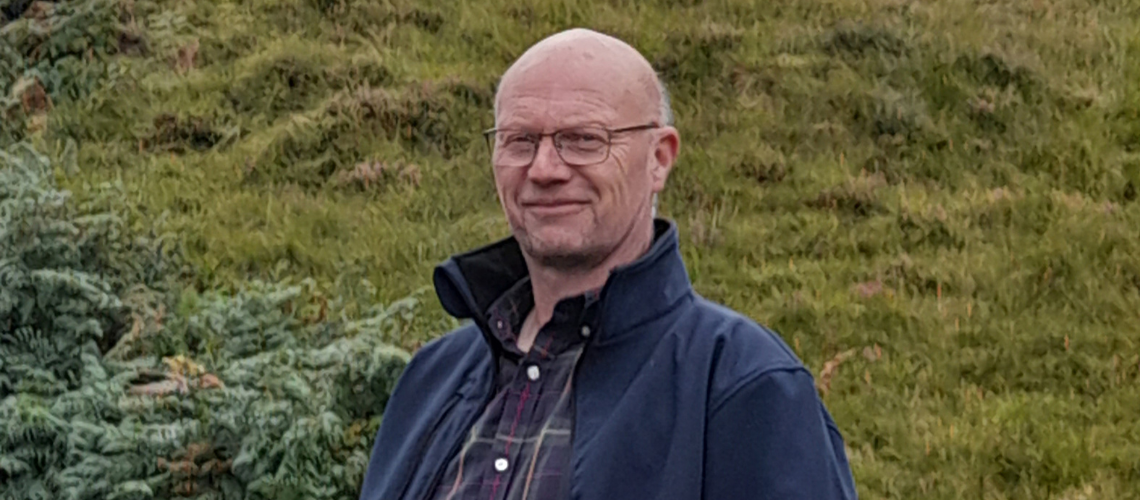
Trefor, a 60-year-old farmer from north Wales, is used to being his own boss and getting on with the job. So, when he first noticed he was making repeated trips to the toilet, he did nothing for "a long time".
“I’m a farmer... so I just got on with the job,” Trefor explains.
Eventually, he visited his GP, where a blood test showed high levels of a protein called prostate specific antigen (PSA), which can suggest prostate issues.
Trefor was referred to a specialist at his local hospital in north Wales.
“My consultant asked me where I’d been and told me I should have seen him a long time ago”.
After an MRI scan and a biopsy of his prostate, Trefor was diagnosed with prostate cancer.
“When I got my diagnosis, I did feel a bit ‘why me?’ Prostate cancer is horrible.”
Because the cancer hadn't spread, Trefor was recommended for treatment in London. In November 2025 he underwent surgery to remove his prostate at University College London Hospital. He agreed to take part in a clinical trial comparing 2 ways of removing the prostate.
The study aims to help doctors understand if removing nearby lymph nodes helps prevent cancer from returning. It also aims to find out if the risk of rare complications, like fluid collecting in the legs, outweighs the benefits. For Trefor, the decision to join was about more than just his own health.
“The fact the research was helping somebody else meant a lot to me,” he says. “The research team told me everything I needed to know. Prostate cancer is horrible, so anything you can do to help is worth it”.
How you can get involved with research
Sign up to Be Part of Research to be contacted about a range of health and care research. Or check out our full list of studies to see if one is right for you.
And if taking part in a study doesn’t feel right at the moment there are other ways to get involved in research.