

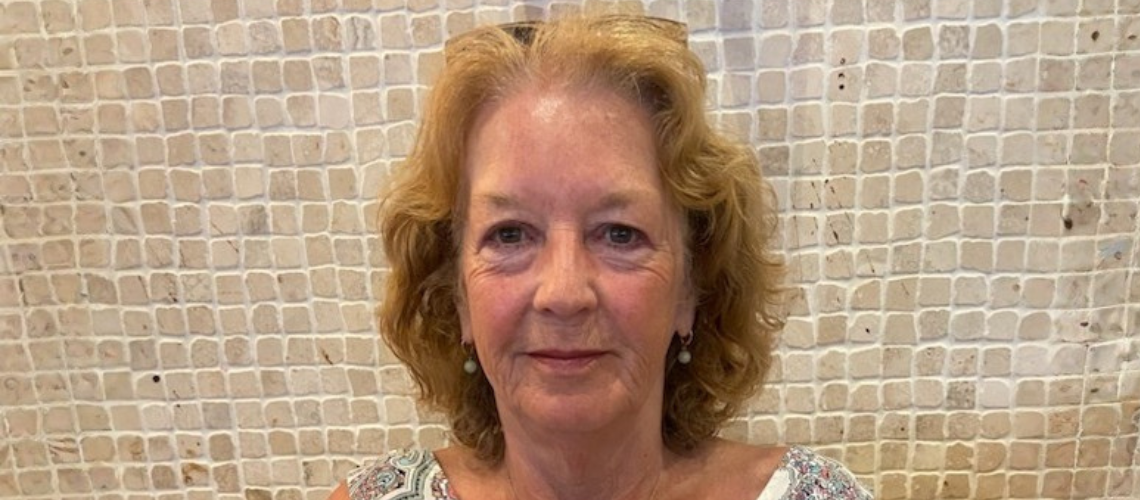
Sandra, 67, was diagnosed with heart failure in summer 2023.
Heart failure is a long term-condition which means the heart is unable to pump blood around the body properly.
Although the diagnosis came as a shock, Sandra was able to manage her symptoms under the care of her GP.
A year later, Sandra was in A&E, after feeling unwell for a week.
“They took a blood test and said ‘you’re having a heart attack’. I was white as a ghost and I was kept in.”
- Sandra
Tests revealed Sandra needed to have a procedure called a coronary angioplasty. This procedure uses a balloon to widen blocked or narrowed coronary arteries. These are the main blood vessels supplying oxygen to the heart.
The procedure also involves inserting a small, mesh-like device called a stent. This holds the artery open and improves blood flow to the heart. It helps to reduce symptoms such as chest pain.
Sandra, who lives in Oswaldtwistle, in East Lancashire, said: “I had an angioplasty in 2005 and it was quite traumatic for me and initially I didn’t want that again. I went into a state of shock when they said I needed one. But then I spoke to the doctors and the research nurse and they were fantastic. They calmed me down.”
Sandra was invited to take part in the ULTRA long study, which is testing new sizes of the BioFreedom Ultra stent. For the stent to work best it must be the correct length and diameter for the heart artery.
While the BioFreedom Ultra stent already comes in many sizes, every heart is unique. This study is looking at the safety and effectiveness of the 14 new size options.
“When I spoke with the research nurse, she told me about the option to be in the study. I read the information and was happy to say yes. It was a longer stent and I liked the idea of that."
- Sandra
Until that time, Sandra had never been on a research study, but she was no stranger to surgery. In 1999, she had her right leg amputated below the knee after doctors discovered a tumour.
This led to her early retirement when she was just 53. Prior to this, she worked for a textile company testing fabrics.
Sandra says that the whole experience has “made me mentally stronger” and remains positive in the face of her health challenges.
After the stent operation, Sandra was in hospital for a few more days. The 2-year study involves her regularly visiting the hospital for check ups. Her health is being assessed during these visits to the hospital’s cardiology department and she is doing well.
Describing how it felt to be the first participant in the world on the study, Sandra said: “It was quite good, really, to be the first person. I think the doctor was quite thrilled.
“I would encourage others to look at research. It’s your own choice and for other people, like me, it might depend on what the research was.”
How you can get involved with research
Sign up to Be Part of Research to be contacted about a range of health and care research. Or check out our full list of studies to see if one is right for you.
And if taking part in a study doesn’t feel right at the moment there are other ways to get involved in research.