


.png)
For 33-year-old Nathalie from Leeds, the motivation to take part in clinical research is deeply personal.
Her 3-year-old son lives with cystic fibrosis, a genetic condition affecting the lungs and digestive system.
She found out about research when he was invited to take part at 18 months old.
Nathalie, a digital marketing professional, said: "I've been interested in being part of research at least for as long as my son has been alive. Because he has cystic fibrosis, medical trials are really important for the development of treatments and medicines. He was on a trial himself for 6 months.
“I could see the contribution that was made, and it made me want to get involved as well."
Nathalie first found out about the National Institute for Health and Care Research (NIHR) through sharing a building with the organisation at work. Once her son got involved, she wanted to take part herself. That’s when she signed up to Be Part of Research. She indicated that she would like to be notified about mental health studies.
Living with anxiety and depression
Throughout her life, Nathalie has lived with anxiety and depression. She was also diagnosed with autism later in life.
She said: "When it comes to conditions like depression, it's not always easy to quantify them. Especially if you've come from adverse life experiences, that's kind of normal for you. The feelings that are associated with depression just come to feel part of life really.
"I would say that I first started to recognise depression-like symptoms from the age of 10 years old. I had a very unstable upbringing. My childhood very much revolved around my parents' volatile emotions.
“It's difficult to equate my symptoms with depression. You associate depression with being a spontaneous breakdown of not being able to cope. That's not necessarily the case with me."
“I've always coped because I've always had to cope for survival.”
- Nathalie
After her relationship with her parents deteriorated, Nathalie left home aged 16. She continued to have depression symptoms while studying at Leeds Trinity University. Following a difficult relationship with a fellow student, she felt isolated and sought help from the university doctor.
She said: “That was the first time I knew myself to be severely anxious and depressed. I really struggled to get out of bed in the morning. That's the first time I was put on anti-depressants.
“I was first prescribed propranolol at that point but that didn't do a thing. The doctor could see how severe it was. I was put on diazepam for a couple of weeks. This of course completely wiped me out.”
Following her undergraduate studies, Nathalie met her now husband of 10 years. She then went to the University of Edinburgh for a master’s degree in psychology. It was during a university lecture that she recognised traits of autism in herself. She was diagnosed soon after.
“Throughout my life I felt like I didn’t fit in. Being diagnosed with autism helped me understand why and it also helped with my anxiety.”
- Nathalie
Later life brought further challenges. Nathalie gave birth to her son in 2022 and it quickly became clear he was unwell. He required emergency surgery, so was taken away from her while he was treated.
She said: “It was highly traumatising. When my son was going through his emergency surgery he was taken away from me.
“I would say that since my son was born, that's been the most recent chapter of depression. Especially as a full-time working parent of a child with additional medical needs, juggling life's many expectations.”
Taking part in research
When she was invited to take part in a trial through Be Part of Research, she signed up straight away. She is taking part in the HOME study, which is exploring new ways to treat major depression using transcranial direct current stimulation (tDCS). 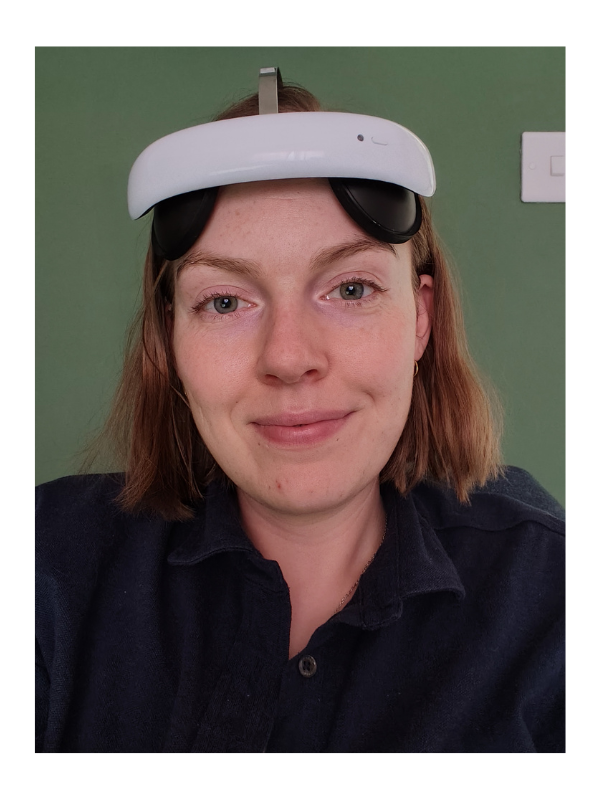
tDCS is a form of neurostimulation that delivers a constant, low-intensity electrical current across specific areas of the brain via electrodes placed on the scalp.
It gently alters the electrical activity in brain regions that regulate mood. These are often underactive in people experiencing severe depression. It aims to stimulate brain function and alleviate depressive symptoms.
Participants are given the electrodes so they can complete their prescribed sessions safely from home. They are given remote guidance and regular check-ins of the trial team.
For Nathalie, taking part involves five 30-minute tDCS sessions each week.
She said: “I'm really enjoying the trial both for the treatment element and engaging with the researchers.
“I would 1000% recommend signing up to Be Part of Research. Without it, I wouldn’t have found out about this study. I especially like the personalisation of it, how it caters research to you and your interests.”
How you can get involved with research
Sign up to Be Part of Research to be contacted about a range of health and care research. Or check out our full list of studies to see if one is right for you.
And if taking part in a study doesn’t feel right at the moment, there are other ways to get involved in research.