

This article was originally written on 2 March 2026.
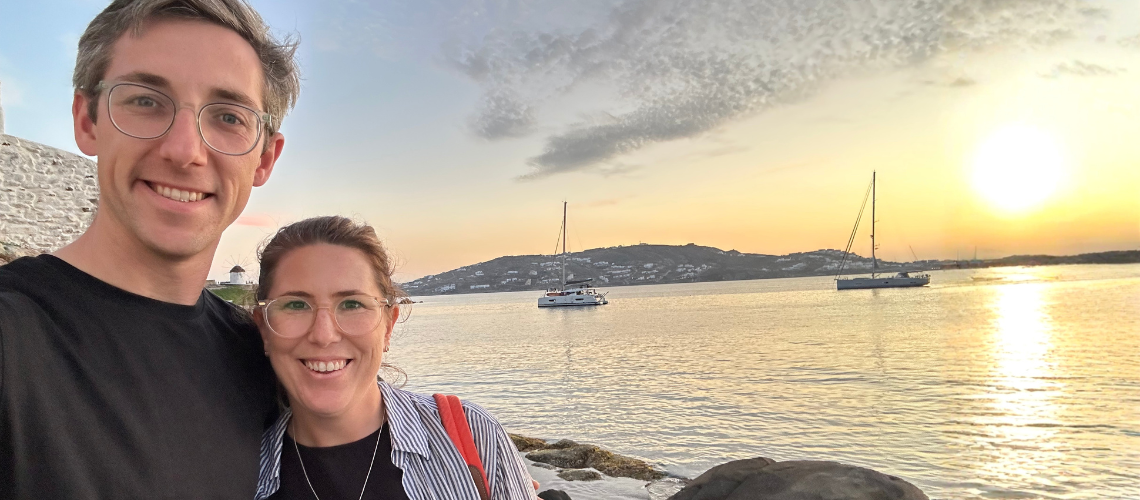
For Michelle, pregnancy was a long-awaited chapter. “I’ve always thought I’d like to be pregnant. The idea of growing a human is fascinating,” she says. Now 32 weeks along, her journey has been mostly smooth, despite some early aversions to chicken and third-trimester aches.
Michelle works in communications for the National Institute for Health and Care Research (NIHR), so she has always been a strong advocate for taking part in research. However, finding the right time to take part herself had proven difficult.
“I’ve been waiting for an opportunity to take part because I think it’s a really worthwhile thing to do. Because we were actively trying to get pregnant, it limited what I could do. I wanted to ‘walk the walk’ and not just talk the talk.”
The opportunity finally arrived during a routine visit to the Harris Birthright Centre. “I had no idea it was a research institute,” she explains.
“When they offered me the chance to participate, I was so excited. I went home and told my partner, ‘I just took part in 2 research trials!’”
- Michelle
At the clinic, she joined a study to help predict pregnancy complications simply by giving an extra vial of blood during her routine tests. This provided a personal benefit: it identified her as being at higher risk for pre-eclampsia, allowing her doctors to proactively manage it with aspirin.
She also gave permission for her routine scans to be filmed to help train AI models for future diagnostic tools.
Michelle explains, “both were super passive and easy.”
Later, when a growth scan showed her baby was measuring large, Michelle was recommended for a gestational diabetes test. This is where her third opportunity to take part in research arose.
She joined the SPROUT study, to help researchers compare the experiences of women with and without gestational diabetes.
“Even though my diabetes test came back negative, I’m still doing the surveys,” Michelle explains. “The questions ask how you’re feeling, what you’re eating, and your exercise patterns. It takes five to ten minutes and comes via a link to my phone. It’s so straightforward.”
Michelle is already thinking about the story she will tell her child one day.
“It’ll be cool to let them know they played a small part in furthering our understanding of things like pre-eclampsia or gestational diabetes before they were even born. It makes me feel proud.”
- Michelle
Michelle encourages other pregnant women to ask questions and ensure they feel comfortable, but to not be afraid of saying "yes" to research.
“If it’s something that is part of your routine care and doesn’t affect the quality of your treatment, why not? It didn’t take much from me, but it will help others in the future. It’s a really worthwhile thing to do.”
How you can get involved with research
Sign up to Be Part of Research to be contacted about a range of health and care research. Or check out our full list of studies to see if one is right for you.
And if taking part in a study doesn’t feel right at the moment there are other ways to get involved in research.