


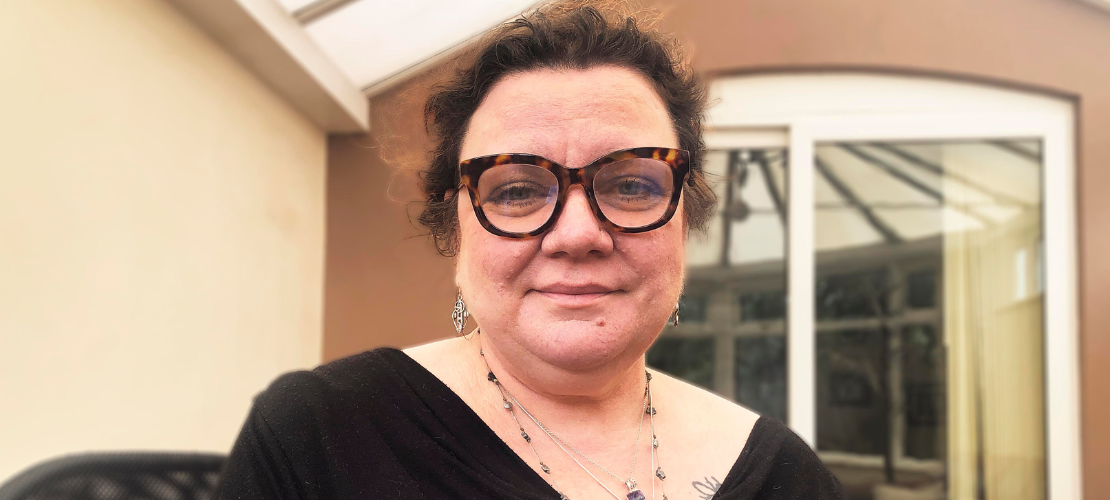
Bernadette, 56, has lived with both anxiety and depression for many years. She has experienced anxiety since age 5, while her depression began in adult life following a period of being bullied in the workplace.
Drawing on her own experiences and her family history of depression, Bernadette is passionate about raising awareness of mental health struggles and is a trained mental health first aider.
While setting up business as a learning development and engagement consultant, Bernadette shares: “people have commented on how I ‘have it all together’. But my demeanour does not always tell the full story and can sometimes mask crippling feelings of anxiety I may have felt earlier that same day.”
“There are times when I speak to people about how I couldn’t get out of bed because I just couldn’t, because the depression or anxiety was crippling.”
- Bernadette
While attending the Tameside Men's Mental Health and Wellbeing Conference, she met staff from the NIHR and found out about the Genetic Links to Anxiety and Depression (GLAD) study.
The study aims to help find effective treatments and improve the lives of people experiencing depression and anxiety, the most common mental health disorders worldwide. In the UK, 1 in 3 people will experience symptoms during their lifetime.
Bernadette, who now lives in North Yorkshire, signed up. In doing so, she has joined over 30,500 people in the UK to have participated in the study which involves completing a questionnaire and providing a saliva sample.
“I’m really happy to support research and, just as I do when I donate blood, I put it on my Facebook page and tell people ‘if you can do it, do it, because it can make a difference’. It’s the same with this study.
“If you can spit in the pot and hand over that sample, it could make a world of difference and it just takes five minutes.”
By taking part, Bernadette and others are allowing researchers to analyse DNA from saliva samples with detailed information about their symptoms to advance research into finding more effective treatments.
“You are providing a potential jar of magic because research might unlock something that means that somebody like me in the future doesn’t have to go through the same things, or can handle them better, or there could be a quicker intervention.”
Bernadette is comfortable in sharing her experiences with depression and anxiety to help generate a positive conversation on the subject, and sharing details of the GLAD study is another way in which she has done this.
“I use it as a tool to normalise it for other people so that they can identify their own issues and see that somebody else is going through the same thing and that it’s okay. At the same time, I think when you talk about it, you have to be careful to not be blasé about it at all.
“When I do get the opportunity and I’m in the right frame of mind and I’m able to articulate it, then it’s important to share the story, and I hope by sharing this study other people will consider taking part, too.”
How you can get involved with research
Sign up to Be Part of Research to be contacted about a range of health and care research. Or check out our full list of studies to see if one is right for you.
And if taking part in a study doesn’t feel right at the moment there are other ways to get involved in research.