


Amber, 27, was away from home at the University of Plymouth studying business when she got the news she had relapsing remitting multiple sclerosis (MS).
MS affects the brain and spinal cord. There is currently no cure, although treatment can help manage the symptoms, including fatigue, dizziness, muscle cramps and memory problems.
The diagnosis followed years of health problems. This came to a head when Amber temporarily lost the sight in one eye due to optic neuritis, an inflamed nerve, behind her eye.
She said: “When I was in secondary school, I was often a bit unwell and I always felt something wasn't right. Then when I went to university, it got worse. But doctors always said it was growing pains, or assumed because I was a student I was out partying all the time.
“I started to think, maybe I was the problem."
“But when I was 20, my symptoms flared up massively. I was on a placement year, working long hours with lots of driving. I had sickness, headaches, and when I lost my vision in one eye, I ended up going to A&E."
“They couldn’t confirm it was MS straightaway. But they didn’t say there was nothing to worry about. And then I got the diagnosis, and that was when my whole life changed."
“I was so scared and I didn't know what to do. The only person I knew that had MS was an old friend's mum, and she couldn't walk."
“I was thinking, my life is literally over at the age of 20. I haven't even got my first proper adult job yet, I've not lived my life.”
- Amber
Amber, who is originally from Bristol but now lives in Plymouth, was told her MS was progressing quickly.
Scared and uncertain about what the future might hold, Amber was given hope when offered the chance to take part in a clinical trial.
The study was testing a drug called ocrelizumab. It was recruiting people like Amber, in the early stages of MS, who had not yet tried other treatments.
Amber continued: “It was such a scary time, and I felt I needed all the support I could get. I thought I would receive that if I took part in the study, and I also wanted to help others in my situation in future. I was so scared when I was diagnosed, and I didn’t want people to feel the way I felt, because I was so lost and didn’t know what I was doing."
“I'm so glad I made that decision, because I was supported amazingly."
- Amber
Amber’s participation in the study ended in 2021. She continues to take the drug, which she says has made a huge difference to her quality of life.
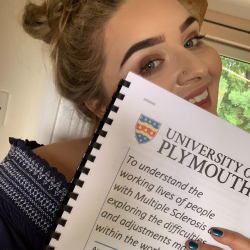
“After taking part in the study, I was in a much better headspace. I knew how to manage everything and I was used to the treatment. And luckily, for me, it has worked. I’m still on the drug, and I haven’t relapsed or had any change in my scans since I started treatment 7 years ago.”
After she was able to return to university and graduate a year later - writing her dissertation on MS in the workplace - Amber worked for NHS Professionals, providing supporting admin to the research team.
“I am just so grateful to the research team, they were like my family. It's all just positive, and if I got asked to be part of another research study, I would absolutely do it.”
How you can get involved with research
Sign up to Be Part of Research to be contacted about a range of health and care research. Or check out our full list of studies to see if one is right for you.
And if taking part in a study doesn’t feel right at the moment there are other ways to get involved in research.