


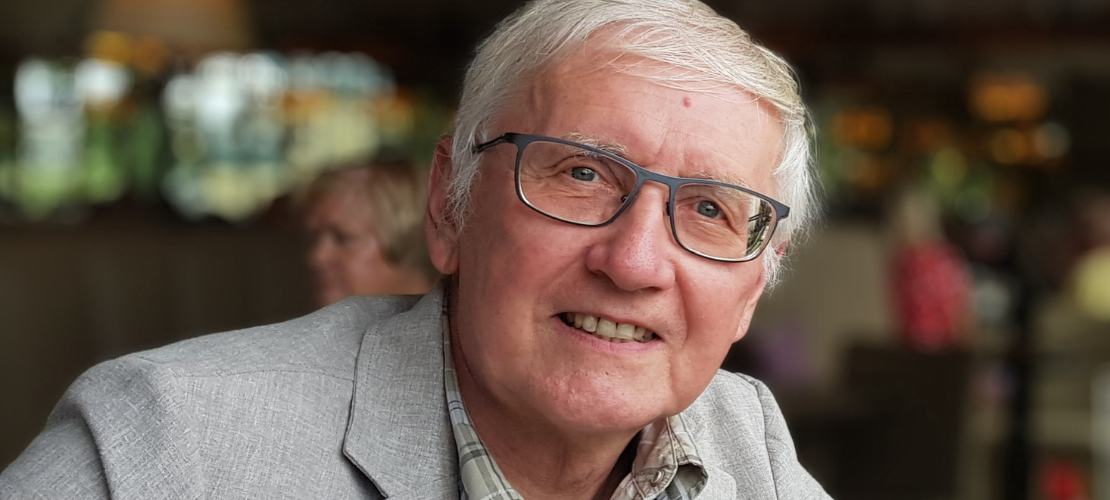
Over 12 years ago Alan developed a constant runny nose, lost his sense of smell and taste and started to suffer from headaches.
He said: “It’s quite debilitating. It’s not obvious that you can’t smell very much and you can’t taste very much. Also your sleep is affected, I couldn’t breathe through my nose at all.”
Alan, 74, who lives with his wife Linda, in Bramhall, Stockport, felt that his quality of life was massively impacted.
After undergoing tests, he was diagnosed with severe chronic rhinosinusitis with nasal polyps. This is a condition that causes severe inflammation in the sinuses and nose.
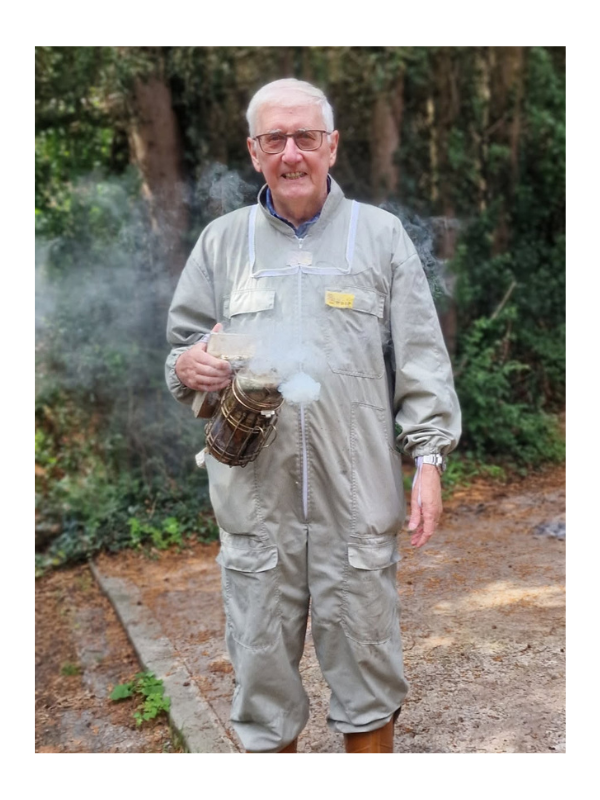
He was prescribed nasal sprays along with steroid tablets but they did not work for him. Alan felt really despondent after suffering for so many years. He also had a fear of hospitals known as ‘white coat syndrome’ which affected how he engaged with healthcare. This meant he was too scared to undergo surgery offered to patients with the condition.
However, Alan was approached by the research team at Stepping Hill Hospital, Stockport. They asked if he wanted to take part in a clinical trial looking at a new drug to help restore his sense of smell. This is instead of the usual treatment, which is surgery.
The study involved participants being given either the research drug or a placebo administered by injection.
He said: “I didn’t want the operation on my nose so I decided to go on the trial for 2 reasons: to help with my white coat syndrome and to hopefully benefit from the trial itself.”
Following a couple of months on the study, Alan began to regain his sense of smell and taste, which greatly improved his quality of life.
He said: “It's the simple things. I smelled fresh coffee for the first time in 10 years, I can smell the onions cooking on the Christmas markets. It has improved my life so much.”
His white coat syndrome also improved. A physical effect for Alan was high blood pressure. Over the course of the trial, his blood pressure eventually returned to the normal range.
He said: “Because I was coming to the same place and seeing the same people, it helped a lot. It’s had a big impact, I’m less frightened of hospitals.
“I would urge anyone who has the chance to go on a research study to do it and I hope others can benefit.”
How you can get involved with research
Sign up to Be Part of Research to be contacted about a range of health and care research. Or check out our full list of studies to see if one is right for you.
And if taking part in a study doesn’t feel right at the moment there are other ways to get involved in research.