


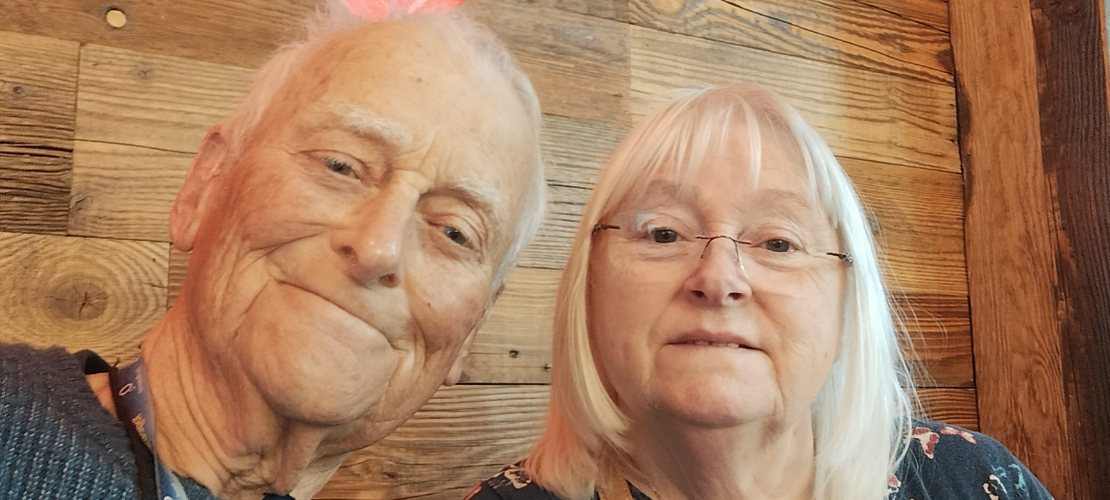
Alan Prangnell, 76, from Totton, Southampton, experiences refractory ascites, caused by cirrhosis, a scarring of the liver which leads to a painful, recurrent build up of fluid in the abdomen.
Treatment involves visiting the hospital every 10 to 14 days to have the fluid drained by inserting a tube into the abdomen for up to 6 hours. The procedure and fluid build up can be painful and if large volumes of fluid are removed, patients may need to receive human albumin solution (HAS) to help maintain blood volume.
Alan, husband to Pam, was invited to participate in the REDUCe2 study, which is comparing draining the fluid at home to at the hospital.
The trial randomly assigns patients to either home or hospital drainage. Alan was assigned to home drainage.
Alan is not eligible for a liver transplant or a procedure to improve blood flow in the liver, so he is receiving palliative care at the end stage of his disease.
The retired former support worker for people with learning disabilities said: “Living with ascites for this past year has been really difficult. The fluid build up I get causes extreme breathlessness. Before taking part in this research I had to go to the hospital all the time, sometimes 2 or 3 times a week to have the fluid removed, which could take several hours.
“We were approached by the research team at the hospital. It was a walk into the unknown but we were pleased to be part of the trial. I was spending so much time in the hospital which wasn’t good for me or my wife.”
Alan said: “At the start, I had a small operation to insert a tube into my abdomen with a tap to drain the fluid. Now, twice a week, the fluid is drained at home.”
The long-term drain allows fluid to be removed gradually at home over the course of the week, preventing large build ups. Community nurses trained Pam to manage the process - including draining the fluid, changing the bag and caring for the dressing without nursing support.
As part of the study, Alan had routine blood tests and completed questionnaires during the home visits from the NIHR’s Agile Research Delivery Team to gather information about his quality of life, symptoms and use of NHS services. As his informal carer, Pam also completed a monthly questionnaire.
"We were pleased to be asked to take part. I am in less pain and discomfort because the fluid can be drained more regularly."
- Alan
He said: “It can all be done at home, rather than going into hospital which means we get back some of our lives again. It has been such a great trip back to independence for me and my wife. I have outside activities and to think I am able to continue with them is a bonus.
“I can now enjoy fishing again, something that I love and Pam has been able to catch up with her friends and family again. We have even managed a holiday to Weymouth."
Pam said: “I can now do all the things that you take for granted, like getting a haircut or going for an eye test. I always had to cancel them because Alan was too ill.”
“Having the drain fitted has changed my life. I hope other people can benefit from me taking part in research.”
How you can get involved with research
Sign up to Be Part of Research to be contacted about a range of health and care research. Or check out our full list of studies to see if one is right for you.
And if taking part in a study doesn’t feel right at the moment there are other ways to get involved in research.